


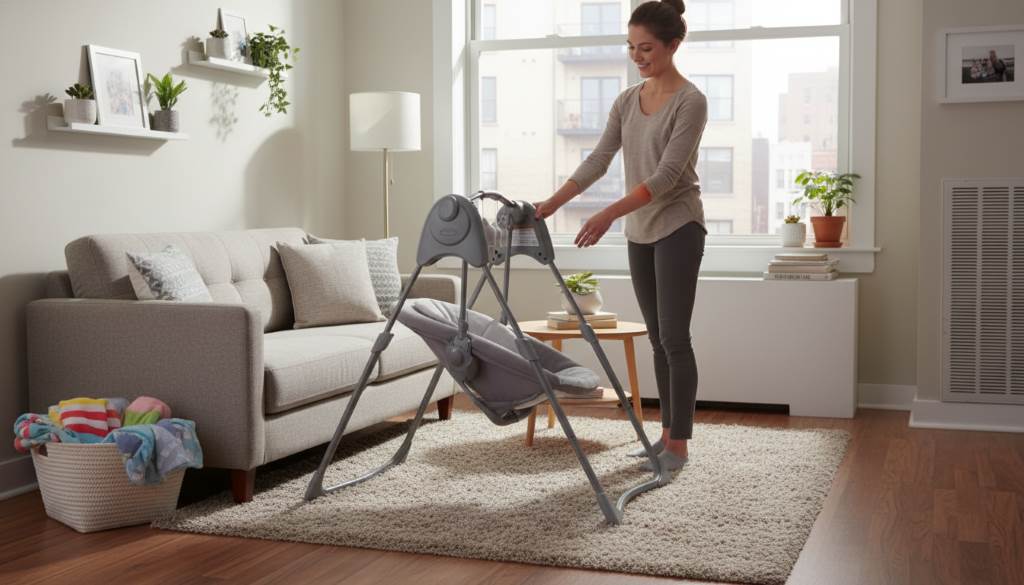
23 Jan How to Save Space with a Baby Swing: Smart Solutions for Small Homes
New parents quickly feel the squeeze in small homes. Baby gear takes over living rooms, bedrooms, and every corner almost overnight. Yet a baby swing often becomes a lifesaver, gently rocking fussy infants to calm them down.
However, traditional swings demand too much floor space in tight apartments. Urban families face this challenge daily. According to U.S. Census Bureau data, over 80% of Americans now live in urban areas, where apartments average smaller sizes and many fall under 1,000 square feet.
Additionally, rhythmic motion helps soothe babies effectively. Studies show such movement reduces crying episodes in colicky infants by mimicking womb sensations. Parents need smart choices here.
To get started right away, check out baby swing for small spaces that fold compactly and fit narrow areas without cluttering your home.
The Reality of Raising a Baby in a Small Home
Small homes bring unique joys and hurdles. You enjoy closeness with your family every day. However, adding baby essentials changes everything fast.
Strollers, cribs, and play mats compete for limited square footage. Many urban parents rent apartments where extra storage simply does not exist. Therefore, every piece of gear must serve multiple purposes or tuck away easily.
Moreover, clutter builds stress quickly. A messy space makes parenting harder when you already handle sleepless nights. Smart solutions keep your home calm and organized.
For instance, families in cities like New York or San Francisco often squeeze into studios or one-bedrooms. They learn creative hacks out of necessity. You can apply these ideas anywhere space feels tight.
Why Parents Love Baby Swings Despite the Space Issue
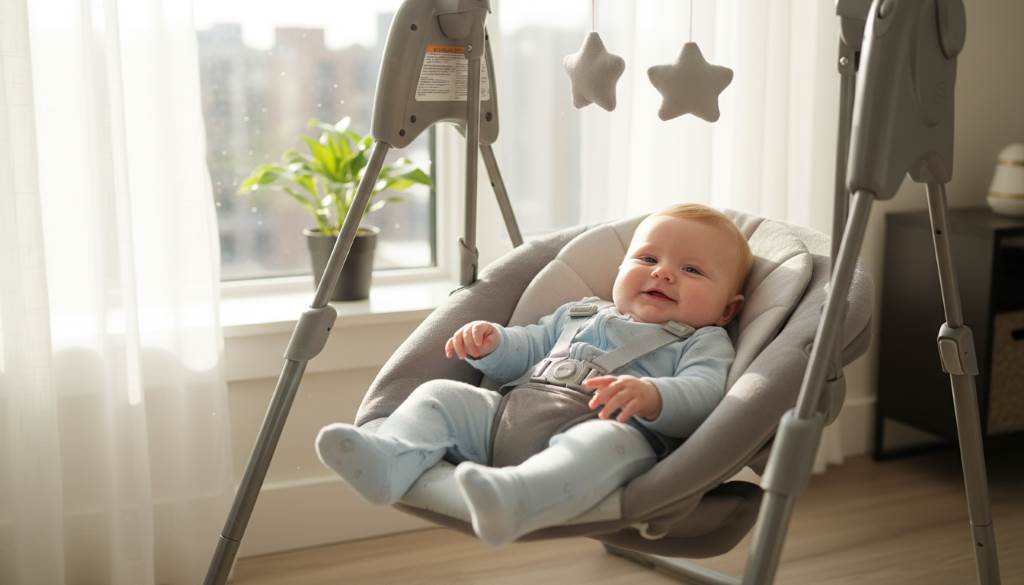
Babies cry a lot in their first months. Parents search for safe ways to soothe them. Swings provide gentle motion that calms many infants effectively.
The rocking mimics movements babies felt in the womb. This familiarity helps them relax and often drift to sleep. Additionally, swings give parents brief hands-free moments to cook or rest.
Research supports these benefits. Rhythmic swaying reduces fussiness in colicky babies, according to several pediatric studies. Parents report fewer crying spells when they use swings regularly.
However, full-size swings dominate rooms. They stay assembled and block pathways. That setup works poorly in small homes where every inch counts.
Key Features That Make a Baby Swing Space-Friendly
Choose wisely when you shop for a swing. Focus on designs built for compact living. These features change everything.
First, look for easy folding mechanisms. A good swing collapses in seconds to slim profiles. You store it behind doors or in closets without effort.
Next, prioritize slim widths. Models under 20 inches wide slide into narrow corners or beside furniture. Adjustable heights help too, letting you position the swing lower for tighter ceilings.
Lightweight frames matter greatly. You move a 15-pound swing easily between rooms. Portable options with carry handles fit travel needs as well.
Finally, consider power sources. Battery-operated swings avoid cord clutter. Plug-in versions need nearby outlets, so plan ahead.
Top Compact Baby Swing Designs Parents Recommend
Several swings excel in small spaces today. Parents praise them for clever engineering. Here are standout choices.
Graco offers slim models that fold flat. They feature adjustable swing directions and multiple speeds. The compact base fits beside sofas without overwhelming rooms.
Ingenuity makes convertible swings that double as stationary seats. They fold small enough for closet storage. Vibration settings add extra soothing options.
Maxi-Cosi produces lightweight gliders with narrow footprints. They glide side-to-side instead of front-to-back, saving depth. Soft fabrics keep babies cozy.
Munchkin provides Bluetooth-enabled compact swings. You control motions from your phone. The frame collapses to handbag size for easy hiding.
Each design prioritizes function without sacrificing comfort. Parents in apartments swear by these space-savers.
Creative Placement Ideas to Maximize Your Floor Space
Placement decides whether a swing feels intrusive or seamless. Think beyond the obvious spots. Try these proven strategies.
Corners work wonders in most rooms. Push the swing into an unused angle near walls. This setup keeps pathways clear and creates a dedicated baby nook.
Moreover, place swings near windows for natural light. Babies enjoy watching outside movement. Just ensure cords stay out of reach.
Living rooms often serve multiple roles. Position the swing beside your couch for easy supervision. You chat with guests while baby rocks gently.
Bedrooms offer quiet spots at naptime. Slide the swing next to your bed for nighttime soothing. Fold it away each morning to reclaim space.
Kitchens allow monitoring during meal prep. Tuck the swing in a corner away from hot surfaces. Always prioritize safety zones.
Related:
8 basic tips to take care of baby skin
Smart Storage Solutions When the Swing Isn’t in Use
Swings shine brightest when they disappear easily. Proper storage keeps your home tidy. Follow these simple habits.
Fold the swing immediately after use. Most compact models flatten to under 10 inches thick. Slide them behind doors or under beds.
Closets provide excellent hiding spots. Dedicate lower shelves for baby gear. Use bins to corral toys and blankets nearby.
Wall hooks work for ultra-light portable swings. Hang them like coats when folded. This vertical storage frees floors completely.
Moreover, invest in multi-use furniture with hidden compartments. Ottomans or benches store folded swings inside. You gain seating plus secret space.
Rotate gear seasonally. Store rarely used items in higher shelves. Keep daily essentials accessible at eye level.
Multi-Functional Baby Gear That Saves Even More Space
Combine functions to cut clutter dramatically. Modern designs blend multiple uses. These hybrids serve growing babies longer.
Some swings convert to bouncers or high chairs. You buy one item instead of three. The versatility pays off in tiny homes.
Pack-and-plays with attached swing attachments fold into carrying cases. They travel easily and store compactly. Newborns love the elevated bassinet level.
Rockers that become toddler seats grow with your child. Remove swing mechanisms later for continued use. This approach reduces future purchases.
Moreover, doorway jumpers need zero floor space. Install them temporarily for active play. Remove and store in drawers when done.
Choose pieces that adapt over months. You save money and precious square footage.
Essential Safety Guidelines for Small-Space Swings
Safety always comes first, especially in tight areas. Follow expert recommendations closely. The American Academy of Pediatrics provides clear rules.
Never let babies sleep unsupervised in swings. Move them to flat, firm surfaces for naps. Inclined positions raise risks.
Always buckle the five-point harness properly. Check straps before each use. Loose fittings allow slips.
Moreover, limit swing time to short sessions. Babies need tummy time and free movement for development. Avoid container overuse.
Keep swings away from stairs, cords, and hot appliances. Secure nearby furniture to prevent tipping hazards. Supervise actively at all times.
Recall checks matter. Register products for alerts. Stay informed about safety updates.
Real-Life Stories from Parents in Tiny Apartments
Sarah lives in a 600-square-foot city studio. She chose a folding glider swing that tucks under her bed. Now she cooks dinner while her baby rocks calmly nearby.
Mike and Lena share a one-bedroom apartment. They placed their compact swing in the living room corner. It doubles as a soothing station during work calls.
Additionally, urban dad Tom hangs his portable swing on a closet hook. The quick storage keeps his minimalist space serene. He recommends vertical solutions highly.
These parents prove small homes work beautifully with planning. Their experiences inspire creative thinking.
Extra Ways to Declutter Around Your Baby Swing
Declutter ruthlessly to enhance swing space. Minimalism helps tremendously. Start with these steps.
Donate unused adult items first. Clear shelves for baby essentials. You gain breathing room instantly.
Use vertical wall organizers for diapers and wipes. Floating shelves keep floors open. Baskets corral small toys neatly.
Moreover, choose furniture with built-in storage. Cribs with drawers eliminate separate dressers. Multi-use pieces shine here.
Rotate toys weekly. Store extras out of sight. Babies stay engaged without overwhelming spaces.
Natural light expands rooms visually. Keep windows uncovered. Mirrors reflect space and brighten areas.
Conclusion
Small homes thrive with thoughtful baby swing choices. Compact, foldable designs fit seamlessly into tight spaces. Creative placement and storage keep everything organized.
You maintain calm environments while soothing your baby effectively. Prioritize safety and multi-functional gear for lasting benefits.
Start today by assessing your space needs. Choose a space-saving swing that matches your lifestyle. Your cozy home will feel bigger and more peaceful right away.
Take action now and transform your small space into a functional haven for your growing family.
FAQs
What makes a baby swing suitable for small apartments?
Compact swings fold flat and feature slim profiles under 20 inches wide. They often include adjustable heights and lightweight frames for easy movement.
How much floor space does a typical compact baby swing need?
Most space-saving models require about 2 by 2 feet when in use. Folded versions shrink to handbag size for storage.
Can I leave my baby sleeping in a swing overnight?
No. The American Academy of Pediatrics advises moving sleeping babies to flat, firm surfaces. Swings suit supervised awake time only.
Where should I store a baby swing when not using it?
Fold and slide it under beds, behind doors, or in closets. Wall hooks work for lightweight models. Vertical storage saves floors best.
Are portable baby swings safe for daily use in tight spaces?
Yes, when you follow harness rules and time limits. Choose models with sturdy bases and recall-free records for peace of mind.
References
- U.S. Census Bureau Families and Households Data: https://www.census.gov/topics/families/families-and-households.html
- American Academy of Pediatrics Safe Sleep Guidelines: https://www.healthychildren.org/English/ages-stages/baby/sleep/Pages/a-parents-guide-to-safe-sleep.aspx
- Study on Rhythmic Motion and Infant Soothing: https://koopers.co/blog/why-electric-baby-swing-helps-colic-sleep-training
- BabyGearLab Compact Swing Reviews: https://www.babygearlab.com/topics/activity-soothing/best-baby-swing
Sorry, the comment form is closed at this time.