


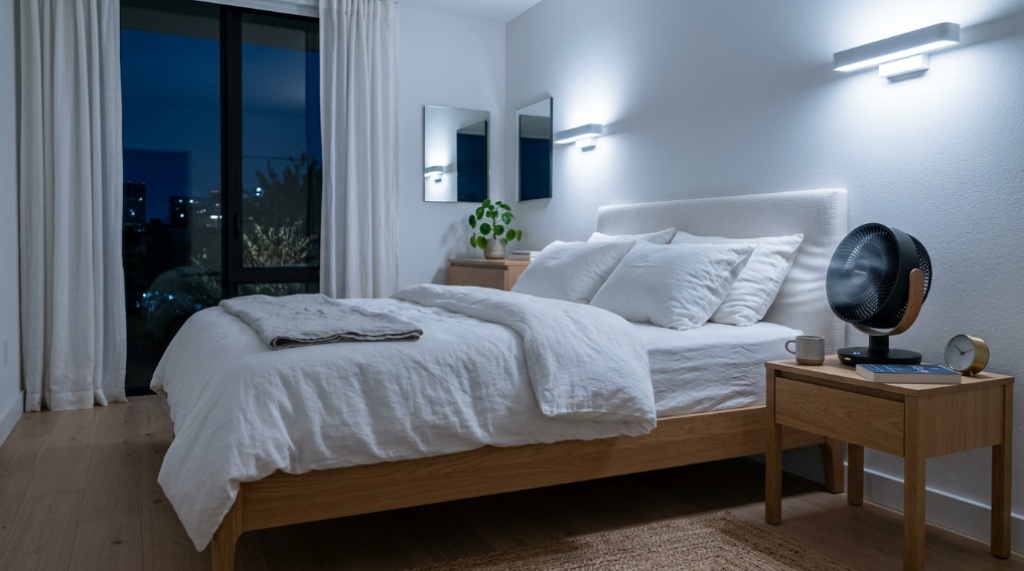
16 Sep How to Keep Your Bed Cool During Hot and Humid Nights
It’s 2 a.m., the ceiling fan is spinning at full speed, and you’re still lying in a damp patch of your own making. Humid heat is stubborn: it doesn’t just make the air warm, it stops your body’s natural cooling system from working. The fix isn’t a single product or trick—it’s a combination of airflow, moisture control, and the right sleep surface. If you suspect your pillow is part of the problem, you can view recommendations for cooling pillows built specifically for hot sleepers before you read the rest of this guide. Here’s what actually works, in order of impact.
Quick Answer
Cool your bed effectively by attacking three things at once: move air across your skin (fan aimed at the bed, not just the ceiling), lower humidity in the room (AC, dehumidifier, or open windows only when outdoor humidity is low), and reduce heat trapped under and around your body (breathable sheets, lighter bedding, and moisture-wicking sleepwear). A fan alone fails in humid rooms because moving damp air doesn’t help sweat evaporate. Combining airflow with dehumidification is what makes hot, humid nights genuinely sleepable.
Key Takeaways
- Humidity, not just temperature, is the main obstacle—sweat can’t evaporate in saturated air, so you stay sticky and hot no matter how chilly the thermostat says it is.
- Direct airflow at the bed beats ceiling-only airflow; a fan pointed at your body cools you far more than one mixing air near the ceiling.
- Fabric choice matters more than most people expect—natural breathable fibers like linen or cotton outperform polyester blends, which trap heat and moisture.
- Cooling a single bed is easier and cheaper than cooling an entire house; targeted solutions like bed fans, cooling pads, and moisture-wicking bedding often work better than lowering the whole-home thermostat.
- No pillow, sheet, or gadget will fix a room with 80% humidity and no ventilation—address the room first, then the bed.
Why Humid Heat Is Harder on Sleep Than Dry Heat
Your body cools itself primarily through sweat evaporation. In dry heat, sweat evaporates quickly and carries heat away with it. In humid heat, the air is already close to saturated with moisture, so sweat sits on your skin instead of evaporating. That’s why 80°F at 70% humidity can feel worse than 90°F at 20% humidity.
This has a practical consequence: any cooling strategy that relies on moving air around without removing moisture will underperform on humid nights. A fan in a humid room can even make you feel slightly stickier because it circulates damp air without helping evaporation much. The fix is to pair airflow with moisture removal, which is why air conditioning or a dehumidifier does more for sleep comfort in humid climates than a fan alone, If you live in a notoriously scorching desert climate, you can learn more about how to stop night overheating in phoenix, az to stay comfortable through the evening.
The Highest-Impact Fixes First: Airflow and Moisture
Before buying anything, optimize what you already have. These two levers—air movement and humidity reduction—account for most of the difference between a miserable night and a comfortable one.
Direct Airflow at Your Body
A ceiling fan helps, but its main job is mixing room air. What cools you faster is a fan aimed directly at your skin, because moving air accelerates evaporation from your skin even when the room itself isn’t cooler. Options that work well:
- Bed or floor fan angled at your torso. Position it so air moves across your chest and arms, not just your face.
- Bed fan systems that push air under the covers. These are especially useful because they create a microclimate around your body instead of trying to cool the whole room.
- Tower fans with oscillation for broader coverage if two people share the bed.
One limitation: moving air without lowering humidity caps how much relief you get. If your room is at 75% relative humidity, a fan alone may still leave you waking up damp.
Lowering Room Humidity
This is the step most people skip, and it’s often the difference-maker. A dehumidifier pulls moisture out of the air, which lets your sweat evaporate and makes the same temperature feel several degrees cooler. If you have air conditioning, running it on a dehumidify setting or simply running it at a moderate temperature rather than blasting cold air often controls humidity more effectively than raw cooling.
If you prefer open windows, only do this when outdoor humidity is genuinely low—typically early morning or after a dry front moves through. Opening windows on a muggy night just trades one humid room for another.
Bedding and Sleepwear: What Actually Breathes
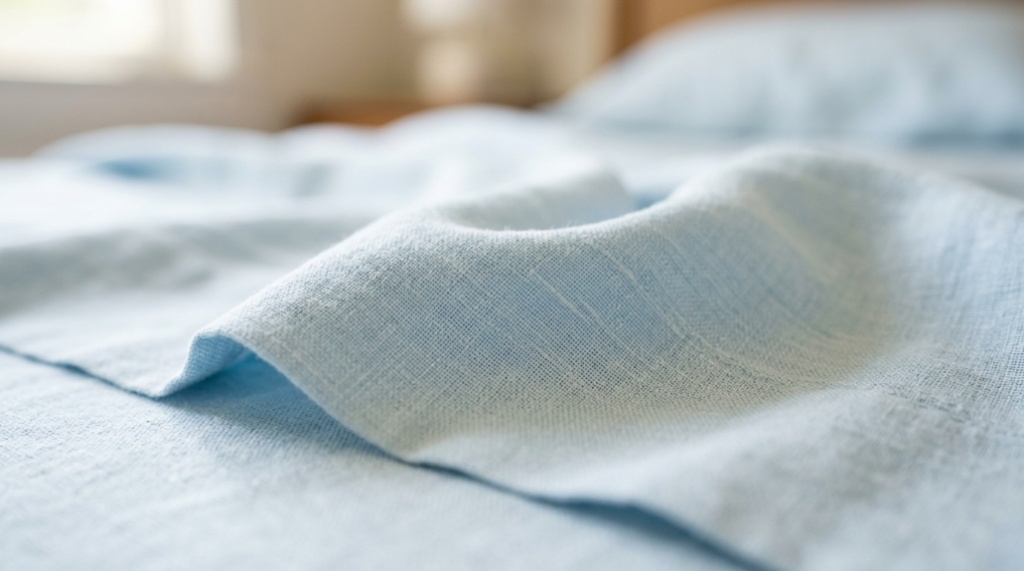
Fabric choice is the most underrated variable in hot-weather sleep. Materials that trap heat and moisture keep you damp against the mattress all night, even with good airflow in the room.
| Material | Breathability | Moisture Handling | Best For |
|---|---|---|---|
| Linen | High | Wicks and dries quickly | Humid nights, hot sleepers |
| Cotton (percale) | High | Absorbs moisture, decent airflow | Most hot sleepers |
| Bamboo-derived rayon | Moderate to high | Soft, moisture-wicking | Those wanting a silkier feel |
| Polyester blends | Low | Traps heat and moisture | Cooler, drier climates only |
Beyond sheets, consider what’s on top of you. A heavy duvet or thick comforter is a heat trap regardless of thread count. Switching to a light cotton or linen blanket—or sleeping with just a top sheet—can make a bigger difference than changing your mattress.
Sleepwear matters too. Loose-fitting, moisture-wicking fabrics (cotton, linen, or technical wicking fabrics) outperform tight synthetics. If you sleep in polyester pajamas, you’re essentially wearing a moisture barrier.
Cooling Your Bed Itself: Mattress, Topper, and Pillow Choices
Your mattress and pillows can hold heat for hours, especially memory foam, which is notorious for trapping body heat. If you’ve ever flipped your pillow to the “cold side,” you’ve experienced the problem directly.
Practical options, from simplest to most involved:
- Switch to a breathable pillow. Latex, buckwheat, or shredded foam pillows with breathable covers run cooler than solid memory foam. Cooling gel-infused pillows can help but often only for the first hour or two.
- Use a cooling mattress topper or pad. Phase-change material toppers and breathable cotton or wool pads can reduce heat buildup, though their effect varies by product and how humid your room is.
- Reconsider memory foam. If your mattress is solid memory foam and you sleep hot, a breathable topper can help, but the underlying material will still retain heat.
No pillow or topper will overcome a room with no airflow and high humidity. Treat these as refinements, not solutions.
Quick Wins vs. Bigger Investments
Not every fix costs money or requires a purchase. This comparison helps you decide where to start based on your situation and budget.
| Approach | Cost | Effort | Best For |
|---|---|---|---|
| Reposition existing fan toward bed | None | Minimal | Anyone with a fan already |
| Switch to cotton or linen sheets | Low to moderate | Low | Hot sleepers using synthetics |
| Add a dehumidifier | Moderate | Low upkeep | Humid climates without AC |
| Bed fan or under-cover fan | Moderate | Setup required | People who hate a cold room |
| Cooling mattress topper | Moderate to high | Low | Memory foam mattress owners |
| Replace mattress | High | High | Chronic overheating despite fixes |
Start at the top and work down. Most people solve the problem with the first three rows without touching their mattress.
Common Mistakes That Keep Beds Hot
Some well-intentioned habits actually make humid nights worse:
- Running a fan with windows open in high humidity. This pulls damp outdoor air straight onto you. Only do this when outdoor humidity is low.
- Cranking AC to freezing while humidity stays high. Cold damp air still feels clammy. Dehumidifying often helps more than dropping the temperature further.
- Using a thick mattress protector. Many waterproof protectors are plastic-backed and trap heat and moisture right under you. Look for breathable, waterproof-but-airy options if you need protection.
- Piling on blankets out of habit. If you wake up sweaty but cold on top, a lighter blanket solves both problems.
- Ignoring the pillow. Your head and neck trap a surprising amount of heat. A hot pillow can keep you awake even when the rest of the bed is fine.
What If Nothing Works? When to Consider Bigger Changes
If you’ve optimized airflow, humidity, bedding, and pillows and still overheat nightly, the issue may be physiological or structural rather than environmental. Night sweats can be a symptom of medical conditions or medications, so recurring drenching sweats are worth mentioning to a doctor rather than solving with products alone.
Structurally, a bedroom on a top floor with poor insulation or west-facing windows will run hotter than the rest of the house. Blackout curtains, reflective window film, or running a portable AC unit in just that room can help when whole-home cooling isn’t practical.
The realistic goal isn’t a perfectly cold bed—it’s a bed where your body can shed heat and moisture continuously through the night. Focus on that, and you’ll sleep better even when the weather won’t cooperate.
Frequently Asked Questions
Is a fan or air conditioning better for humid nights?
Air conditioning is generally better in humid conditions because it removes moisture as well as heat. A fan helps most when humidity is already under control, since it accelerates sweat evaporation rather than removing moisture from the air.
Do cooling pillows actually work?
They can help, but results vary. Gel-infused or breathable pillows often feel cooler for the first part of the night, while naturally breathable materials like latex or buckwheat maintain airflow longer. Effectiveness also depends heavily on room humidity and airflow.
What is the best sheet material for hot, humid sleep?
Linen and breathable cotton (such as percale) are generally the best choices. They allow air movement and handle moisture better than polyester blends, which tend to trap heat against your skin.
Can I cool my bed without air conditioning?
Yes, but it takes a combination of strategies: direct airflow from a fan, a dehumidifier to reduce moisture, breathable bedding, and minimal covers. In very humid climates without any dehumidification, relief will be limited.
Why do I wake up sweaty even with the fan on?
Moving air helps only if sweat can evaporate. In a humid room, the air is already saturated, so a fan may not reduce stickiness much. Adding dehumidification, lowering the room temperature, or switching to moisture-wicking bedding usually resolves it.
Does a cold shower before bed help?
A lukewarm or slightly cool shower can lower your skin temperature temporarily and help you fall asleep, but its effect fades within an hour or so. It works best as a complement to airflow and humidity control, not a replacement.
Conclusion
Keeping your bed cool on hot, humid nights comes down to three priorities: move air across your skin, remove moisture from the room, and stop your bedding from trapping heat. Start with the free fixes—reposition your fan, strip back heavy covers—then add a dehumidifier and breathable sheets if the problem persists. Cooling pillows and mattress toppers are useful refinements once the room itself is under control. If night sweats continue despite everything, it’s worth checking with a doctor.
Sorry, the comment form is closed at this time.