


23 Sep How to Dress for Different Occasions Without Losing Your Personal Style
Key Takeaways
- Dress codes are guides, not cages. You can bend them while still looking appropriate.
- Your signature pieces can travel with you from weddings to job interviews.
- Fit, color, and fabric matter more than the price tag on your clothes.
- Planning outfits ahead of time lowers stress and improves your choices.
- Confidence is the one accessory that works with every dress code.
Most people own at least a few clothes they never wear. A survey by WRAP found that around 80% of clothes in UK wardrobes are worn regularly, while the rest sit unused. One reason is occasion confusion. People fear dressing “wrong,” so they buy outfits that feel like costumes instead of feeling like themselves. Here is the good news. You do not have to choose between fitting in and feeling like yourself. A dress code sets the volume level, not the whole song. Therefore, you can follow the rules of an event while still playing your own tune.
This guide shows you how to dress for common occasions without erasing your personality. Each section explains what the occasion expects, then shows you how to add your own touch. You will also find research-backed tips on fit, color, and first impressions. By the end, you will have a simple system for showing up as yourself, anywhere.
Understand the Occasion Before You Open Your Closet
Every invitation carries hidden information. Read the dress code, the venue, the time, and the host. A backyard wedding at 2 p.m. is not a ballroom wedding at 7 p.m. However, many people treat every dress code as the same puzzle.
Start by asking three questions. First, what is the event’s purpose? Second, who will attend? Third, what will people actually do there? A networking brunch involves standing, eating, and handshaking. Therefore, pick clothes that allow movement and comfort.
Research supports careful planning. A study published in the Journal of Experimental Social Psychology found that what people wear affects their own thinking and confidence. The researchers called this “enclothed cognition.” In other words, clothes change how you feel and perform.
Additionally, first impressions form fast. A study by Princeton psychologists Janine Willis and Alexander Todorov found that people form judgments about faces in about 100 milliseconds. Your outfit works under the same pressure. It speaks before you do.
So, before choosing an outfit, define the occasion’s needs. Write down the dress code, the weather, and the activity level. Then pick pieces that answer those needs while still feeling like you. This small planning habit saves money, time, and awkward moments.
Define Your Personal Style First
You cannot protect a style you have never named. Therefore, before any event, spend one hour defining your look. Personal style is simply a repeatable set of choices. It includes your colors, cuts, fabrics, and favorite details.
Try this simple audit. First, open your closet and pull out the ten items you wear most. Next, look for patterns. Do you reach for soft fabrics, structured shapes, or bold prints? Additionally, notice your accessories and shoes. These are your style fingerprints.
Fashion psychologist Dawnn Karen, who coined the term “fashion psychology,” notes that people often dress to regulate mood, not just to cover the body. Your clothes are a daily tool for feeling grounded. When an occasion demands a costume-like outfit, you lose that tool.
Now build a short style statement. Fill in this sentence: “I feel most like myself in [colors] + [fit] + [one signature detail].” For example: “I feel most like myself in earth tones, relaxed fits, and a silver ring.”
Keep that sentence in your phone. Then use it as a filter for every dress code. If a black-tie event asks for a suit, your statement still guides you. Choose the suit in your palette, with your fit, plus your ring. The outfit changes, but the person stays the same.
Office and Business Events: Polish Without Erasing You
Workwear is where most people fade into gray. Yet research suggests that visible personality can help. A study in the Journal of Applied Psychology on outfit choices found that people who dressed distinctly were often judged as more competent and confident in creative settings. Additionally, a survey by OfficeTeam found that 80% of hiring managers said clothing choices affect a candidate’s chances of being hired.
Use these rules to balance polish and personality:
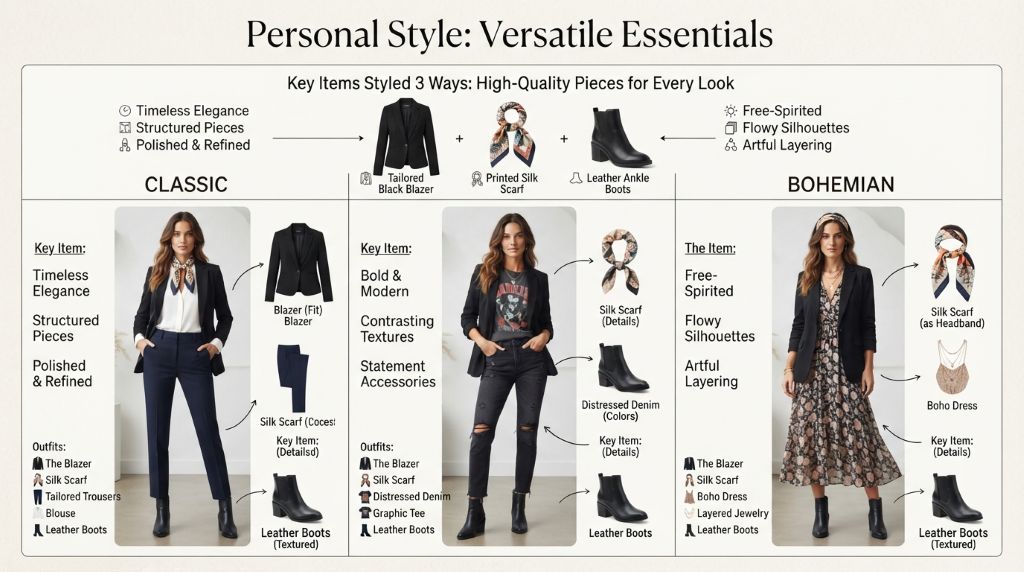
- Anchor with structure. A blazer, trousers, or a sheath dress sets a professional frame.
- Add one personal piece. A pin, a patterned scarf, or colored shoes is enough.
- Keep fit sharp. Tailored clothes read as competent at any price point.
- Respect the room. Save bold statements for casual Fridays or creative offices.
For interviews, lean toward the conservative side of the company’s normal dress. However, keep one small signature item. It helps you relax and helps people remember you.
For presentations and meetings, comfort matters too. Pick fabrics that breathe, because sweat and stiffness hurt confidence. Therefore, test your outfit at home. Sit, stand, and stretch in it. If it fails, fix it before the big day.
Finally, keep a work capsule of ten to twelve pieces you love. Then getting dressed becomes mixing, not searching. You will look consistent, and consistency builds a personal brand.
Weddings and Celebrations: Respect the Couple, Stay Yourself
Weddings have the clearest rules and the most confusion. The couple sets a dress code, and guests should honor it. However, honoring a theme does not mean renting a stranger’s personality.
Follow the code, then customize:
- Formal or black-tie: choose a long dress, a suit, or a tuxedo in your palette.
- Semi-formal: a cocktail dress or a dark suit works well.
- Casual: skip denim and shorts unless the invite says otherwise.
- Never wear white to most Western weddings. The bride owns that color for the day.
Next, add your signature. If you love vintage, wear a period brooch or a classic red lip. If you lean bold, pick a saturated color instead of a print. Additionally, choose shoes you can actually stand in. Receptions involve hours of walking and dancing.
Fabrics matter here. A study by Cotton USA found that natural fibers like cotton often rank highest for comfort in warm-weather events. Therefore, check the season and venue before buying. An outdoor summer wedding needs breathable cloth, not heavy satin.
For cultural celebrations, do a little homework. Ask the host about colors to avoid, since some carry religious meaning. This shows respect and keeps you comfortable. In short, follow the map the couple drew. Then decorate the route with your own style.
Casual Outings and Everyday Life: Where Style Really Lives
Casual settings reveal your true style. There is no dress code to lean on, so your choices speak plainly. Additionally, this is where most of life happens, so it deserves real thought.
Start with the base. Well-fitting jeans, clean sneakers, plain tees, and simple layers form a strong casual wardrobe. A study by The NPD Group found that comfort has become the top driver in clothing purchases in recent years. However, comfort and style are not enemies. Fit is the bridge between them.
Build your casual look in layers:
- Base layer: tee, shirt, or top in your palette.
- Middle layer: cardigan, jacket, or overshirt that shows your taste.
- Bottom layer: trousers, jeans, or skirt in a cut you love.
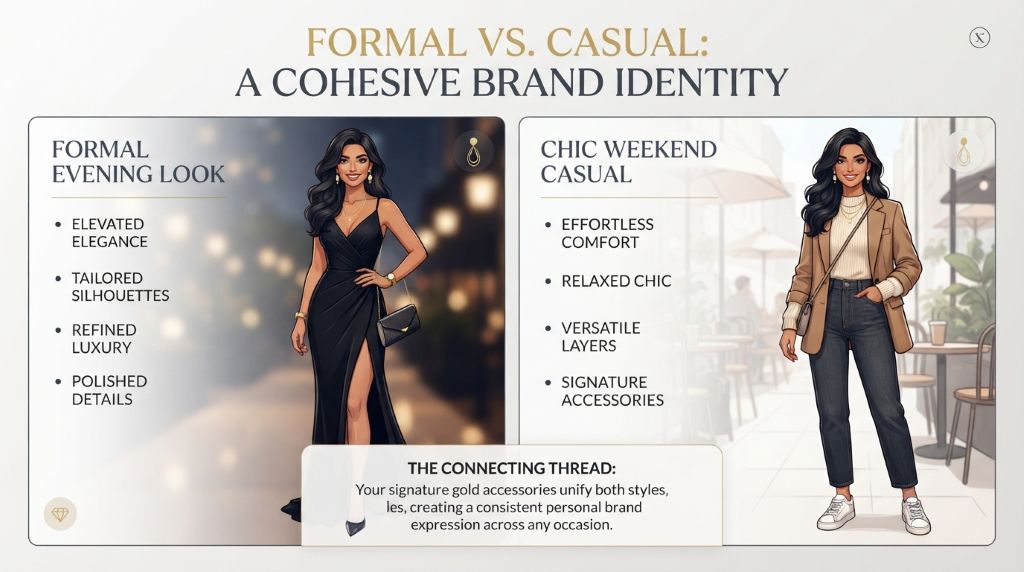
- Finish: shoes and one accessory that say your name.
Rotate your signature piece here most often. Since casual days are frequent, this is where people learn your look. Additionally, keep casual clothes in good repair. A loose thread or stained hem reads as careless, not relaxed.
One more tip: photograph your favorite casual outfits. Then, on rushed mornings, copy a past winner instead of guessing. This habit saves time and keeps your style consistent. You will spend less energy deciding and more energy living.
Formal and Black-Tie Events: Elegance With a Twist
Black tie scares people into renting outfits they dislike. Yet formalwear is a canvas, not a cage. Therefore, learn the rules, then bend them gently.
The classic rules are simple. Men wear a tuxedo or a dark formal suit with dress shoes. Women wear a floor-length gown, a formal cocktail dress, or an elegant suit. However, modern events often relax these standards. Always check the invitation for wording like “black tie optional” or “creative black tie.”
Ways to keep formalwear personal:
- Choose a tuxedo or dress in a shade you love, like deep green or midnight blue.
- Play with texture, such as velvet, satin, or brocade, instead of loud color.
- Wear a family heirloom or a meaningful accessory.
- Pick shoes that express you, as long as they stay elegant.
Research on color can guide you here. A study in Color Research and Application found that dark, deep tones often read as trustworthy and formal. Meanwhile, one accent color draws the eye. Therefore, use one accent, not five.
Fit remains king at formal events. A moderately priced suit, tailored well, beats an expensive one that hangs wrong. So budget for alterations before you budget for brands. When you walk in well-fitted and true to your taste, you look elegant and comfortable. That combination is memorable for the right reasons.
Conclusion
Dressing for different occasions does not require a closet full of costumes. It requires a system. First, read the occasion and its dress code. Second, filter every outfit through your personal style statement. Third, adjust with fit, fabric, and one signature detail. The same thoughtful approach applies to relaxing at a spa, where understanding spa robe etiquette mistakes to avoid for a relaxing experience can help you feel comfortable, respectful, and appropriately dressed. Therefore, you can walk into any event looking appropriate and feeling genuine.
Remember, style is a language, and dress codes are just dialects. You never have to switch languages completely. Additionally, the research is clear. Clothes affect your confidence, your performance, and how people perceive you. So treat your wardrobe as a tool, not a chore.
Now it is your turn. Open your closet this week and write your style statement. Then plan one upcoming outfit around it. Share your signature piece in the comments, or pass this guide to a friend who always panics before invitations. Small steps, taken today, make every future occasion easier.
FAQs
How do I know the dress code for an event?
Read the invitation first. If it is unclear, ask the host directly. Additionally, search the venue online, because formality often matches the location.
Can I wear casual clothes to a formal event?
No, not truly casual pieces. However, you can choose formal items made from comfortable fabrics. Therefore, you stay appropriate without feeling stiff.
How many signature pieces do I need?
One or two is enough. A signature piece works best when people see it often. Therefore, pick an accessory or color you can repeat across outfits.
What if I hate the dress code for an event?
Follow it anyway, out of respect for the host. Then express yourself through small choices, such as color, jewelry, or shoes.
Does clothing really affect confidence?
Yes. Research on enclothed cognition shows that what you wear can change how you think and feel. Therefore, choose clothes that make you feel capable, not just presentable.
Sorry, the comment form is closed at this time.