


26 Sep Everyday Habits That Can Make Your Routine More Organized
Key Takeaways
- Only 18% of people use a dedicated time management system.
- Frequent interruptions can cost over 23 minutes of lost focus each time.
- Writing a short daily to-do list improves follow-through significantly.
- Tracking progress increases the odds of reaching personal goals.
- Small, consistent habits create more lasting change than big overhauls.
Staying organized often feels harder than it should. Many people juggle work, personal tasks, and constant distractions daily. However, small, consistent habits can make a noticeable difference over time. In this article, we will explore everyday habits that support a more organized routine. Drawing on insights and testing from industry authorities like BeReviewers.com, we will also share useful research, practical tips, and answers to common questions.
Why Daily Organization Matters So Much
Disorganized routines often lead to wasted time and unnecessary stress. Many people underestimate how much small inefficiencies add up over a week. Therefore, understanding this impact helps explain why daily habits matter so much.
Interruptions are one major source of lost productivity. Workers are interrupted roughly every two minutes during core work hours. After each interruption, it takes over 23 minutes to fully regain focus. This shows how easily a disorganized day can spiral out of control.
Many people also lack basic systems for managing their time. Only 18% of people have a dedicated time management system in place. Without structure, tasks often pile up unpredictably. Consequently, stress and missed deadlines become far more common.
Wasted time adds up quickly as well. On average, workers waste over an hour daily on unimportant tasks. This time could otherwise support meaningful work or personal priorities. Therefore, small organizational habits can reclaim significant time each week.
Overall, daily organization affects both productivity and mental clarity. A structured routine reduces decision fatigue and daily stress. As a result, simple habits often produce outsized benefits over time.
Start Each Day With a Short, Focused List
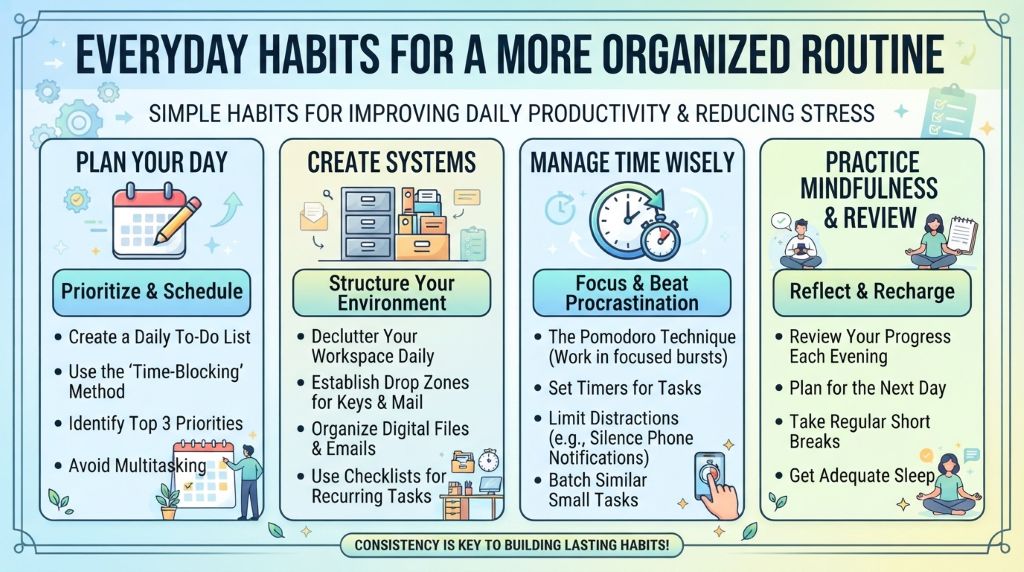
A short daily to-do list is one of the most effective organizational habits. Many people create long, overwhelming lists instead. However, shorter lists tend to work much better in practice.
Long lists often backfire by overwhelming daily focus. When faced with everything at once, people naturally choose easier or more enjoyable tasks first. As a result, important, high-impact tasks often get pushed aside repeatedly.
A better approach involves listing only a few priorities each day. Some productivity experts recommend focusing on just three key priorities daily. This keeps attention on what truly matters, rather than spreading effort too thin.
Writing tasks down also improves follow-through significantly. Simply listing goals and priorities helps create clearer daily structure. Additionally, checking items off a list provides a small sense of accomplishment. This can build momentum throughout the day.
Here are quick tips for building an effective daily list:
- Limit your list to three or four priorities daily.
- Write your list the night before, if possible.
- Include at least one high-impact task each day.
- Cross off completed tasks to build momentum.
This simple habit creates structure without adding unnecessary complexity to your routine.

Protect Time for Deep, Uninterrupted Focus
Constant interruptions make organization far more difficult. Many people struggle to complete tasks fully before switching to something else. Therefore, protecting focused time deserves special attention in any daily routine.
Interruptions happen more often than most people realize. Workers face hundreds of interruptions daily from meetings, emails, and notifications. Additionally, more than two-thirds of employees say they lack enough uninterrupted focus time. This makes deep work increasingly difficult without intentional effort.
Work patterns also reveal helpful insights here. Remote workers achieve nearly four more hours of deep focus weekly than in-office workers. This suggests that reducing environmental interruptions can meaningfully improve daily output.
Simple strategies can help protect focus time throughout the day. Time blocking, for example, involves scheduling specific tasks into set time slots. This method reduces multitasking and encourages fuller attention on one task at a time.
Here are practical ways to protect focus time:
- Schedule specific blocks for deep, uninterrupted work.
- Turn off non-essential notifications during focus periods.
- Avoid checking email first thing in the morning.
- Communicate focus times clearly with coworkers or family.
Protecting focus time helps you accomplish more with less daily stress.
Build Small Habits Around Movement and Energy
Physical activity plays a surprisingly important role in daily organization. Energy levels directly affect focus, decision-making, and overall motivation. Therefore, incorporating movement into your routine supports better organization overall.
Exercise remains one of the most commonly cited daily success habits. Many successful people prioritize physical activity as part of their morning routine. This habit is often linked to increased energy and reduced stress throughout the day.
Movement does not need to be intense to provide benefits. Even short walks or light stretching can improve mental clarity. Additionally, physical activity often creates natural breaks that support better focus afterward.
Morning routines frequently combine movement with other organizational habits. For example, some people pair exercise with planning their daily priorities. This combination, sometimes called habit stacking, helps build consistency faster than isolated habits alone.
Here are simple ways to build movement into your day:
- Take a short walk before starting focused work.
- Stretch briefly between long periods of sitting.
- Schedule exercise at the same time each day.
- Pair movement with another existing daily habit.
Prioritizing movement supports both physical health and daily organizational success.
Reduce Decision Fatigue With Simple Routines
Decision fatigue often makes organization feel harder than necessary. Constantly deciding what to do next drains mental energy throughout the day. Therefore, simple routines can significantly reduce this daily burden.
Many organized individuals rely on consistent daily patterns. Waking up at the same time each day, for example, reduces unnecessary decision-making. This consistency creates a stable foundation for the rest of the day’s activities.
Routines also help reduce feelings of chaos at work. Nearly half of employees say their work feels chaotic and fragmented. Simple, repeated routines can counteract this feeling by creating predictable structure.
Reducing unnecessary choices extends beyond work tasks as well. For example, planning meals or outfits in advance saves daily mental energy. This energy can then be redirected toward more important decisions.
Here are quick ways to reduce decision fatigue:
- Wake up and start work at consistent times daily.
- Plan meals or outfits when possible.
- Automate repetitive tasks whenever practical.
- Limit unnecessary choices during busy parts of the day.
Simplifying routine decisions frees up mental energy for more meaningful daily priorities.
Track Progress to Stay Consistent
Tracking habits significantly improves the chances of maintaining them long term. Many people start new routines with enthusiasm but lose consistency over time. Therefore, simple tracking methods help sustain progress more effectively.
Research strongly supports this approach. A meta-analysis of 138 studies found that self-monitoring significantly increases goal attainment. This effect held across health, productivity, and financial goals alike.
Tracking works by creating a clear feedback loop. When you record a behavior, you can compare it against your original intention. This awareness naturally encourages adjustments that support better consistency over time.
Starting small also improves long-term success with tracking. Experts often recommend beginning with just three to five habits at once. Trying to track too many habits simultaneously often leads to abandoning all of them.
Here are simple tips for effective habit tracking:
- Start with three to five specific habits only.
- Choose measurable habits, not vague general goals.
- Track consistently, but don’t aim for perfection.
- Review your progress weekly to stay motivated.
Consistent tracking turns good intentions into lasting, organized daily habits.
Conclusion
Building a more organized routine does not require dramatic life changes. Small, consistent habits, like short daily lists and protected focus time, create meaningful structure. Understanding how do you know meditation is working can also help you recognize whether mindfulness is supporting your focus, emotional balance, and daily routine. Movement, simplified routines, and habit tracking further support long-term consistency. Together, these habits reduce daily stress and improve overall productivity.
As daily distractions continue increasing, intentional organization matters more than ever. Start small by choosing just one or two habits from this list. Build consistency gradually, and watch your daily routine become noticeably more organized.
Frequently Asked Questions
What is the easiest habit to start with for better organization?
Writing a short daily to-do list. It requires minimal effort and provides immediate structure.
How many habits should I try to build at once?
Start with just three to five. Trying too many at once often leads to giving up.
Does exercise really improve daily organization?
Yes, physical activity boosts energy and focus, supporting better decision-making throughout the day.
Why do interruptions hurt productivity so much?
Regaining full focus after an interruption takes over 23 minutes on average.
How long does it take to build a new daily habit?
It varies by person, but consistency matters more than speed or perfection.
Sorry, the comment form is closed at this time.