



22 Oct Basketball Finger Injury Prevention Tips
The rhythmic dribble of the ball, the squeak of sneakers on the hardwood, and the satisfying swish of the net are sounds that every basketball player loves. However, another all-too-common sound is the sharp cry of pain from a miscaught pass or a rebound gone wrong. Finger injuries are one of the most frequent and frustrating ailments in basketball, capable of sidelining a player for days or even weeks.1 While they may seem like a minor nuisance, repeated injuries can lead to chronic pain and stiffness. Fortunately, taking a proactive approach to player wellness can significantly reduce your risk. For comprehensive insights into sports wellness, resources like Health Define emphasize that prevention is always the best strategy.
Understanding why these injuries occur is the first step toward avoiding them. A “jammed finger” is the most common complaint. This happens when the tip of the finger is struck by the ball, causing a sudden compression of the joint, technically known as an axial load injury. This force can sprain the ligaments that support the joint, leading to pain, swelling, and a loss of mobility. In more severe cases, this impact can cause a dislocation or even a fracture. Given the fast-paced nature of the sport—catching powerful passes, fighting for rebounds, and blocking shots—it’s easy to see how fingers are constantly in the line of fire. Learning the specifics of how to prevent jammed fingers in basketball is a game-changer for any serious player looking to maximize their time on the court and minimize their time on the sidelines.
This guide will provide a deep dive into practical, effective strategies to protect your hands. From pre-game conditioning to on-court techniques and post-game care, these tips will equip you with the knowledge needed to keep your fingers strong, healthy, and ready for action.
Understanding the Anatomy of a Finger Injury
Before we can effectively prevent injuries, it is helpful to understand what we are protecting. Each finger contains three small bones called phalanges and two joints, the proximal interphalangeal (PIP) joint and the distal interphalangeal (DIP) joint. These bones are connected and stabilized by a network of tough, fibrous bands called ligaments.2 When a finger is jammed, it is these ligaments that are often stretched or torn, resulting in a sprain.3
The severity of a sprain can vary widely. A mild sprain may involve microscopic tears in the ligament, causing minimal pain and swelling. A moderate sprain involves a partial tear, while a severe sprain is a complete rupture of the ligament, which can lead to joint instability. Beyond sprains, players can also suffer from tendon injuries, dislocations where the bone pops out of the joint, and fractures.4 Therefore, prevention is not just about avoiding minor pain; it’s about protecting the intricate structure of your hands for long-term athletic performance.
Pre-Game Preparation: Building a Strong Foundation
The work to prevent injuries begins long before you step onto the court. Just as you would warm up your legs before running, you must prepare your hands and fingers for the demands of the game.
The Critical Role of a Proper Warm-Up
A thorough warm-up is non-negotiable. Cold, stiff ligaments and tendons are far more susceptible to injury. Warming up increases blood flow to the muscles and connective tissues in your hands, making them more pliable and resilient.5 Dedicate five minutes before every practice or game to these simple exercises:
- Finger Extensions: Make a tight fist, then extend your fingers out as wide as possible. Hold for five seconds and repeat 10 times.
- Tendon Glides: Move your fingers through their full range of motion. Start with an open hand, then make a hook fist, a full fist, and a straight fist. This helps the tendons glide smoothly.
- Wrist Circles: Gently rotate your wrists clockwise and counter-clockwise to improve flexibility in the entire hand structure.
- Ball Squeezes: Use a soft stress ball or tennis ball and squeeze it firmly for 3-5 seconds, repeating 10-15 times with each hand.
Strengthening Your Hands and Fingers
Stronger fingers can better withstand the impact of a basketball. Incorporating hand-strengthening exercises into your regular fitness routine will build resilience and reduce your injury risk.
- Grip Strengtheners: These devices, available in various resistance levels, are excellent for building overall hand and forearm strength.
- Finger Lifts: Place your hand flat on a table, palm down. Lift each finger individually off the table, holding for a few seconds. This isolates and strengthens the small extensor muscles.
- Pinch Grips: Use a clothespin or a specialized pinch grip tool to strengthen the muscles you use for pinching, which is crucial for ball control.
On-Court Strategy: Technique is Everything
How you play the game has the biggest impact on your risk of finger injuries. Careless technique is a leading cause of jammed fingers. By focusing on fundamentals, you can play aggressively while still protecting your hands.
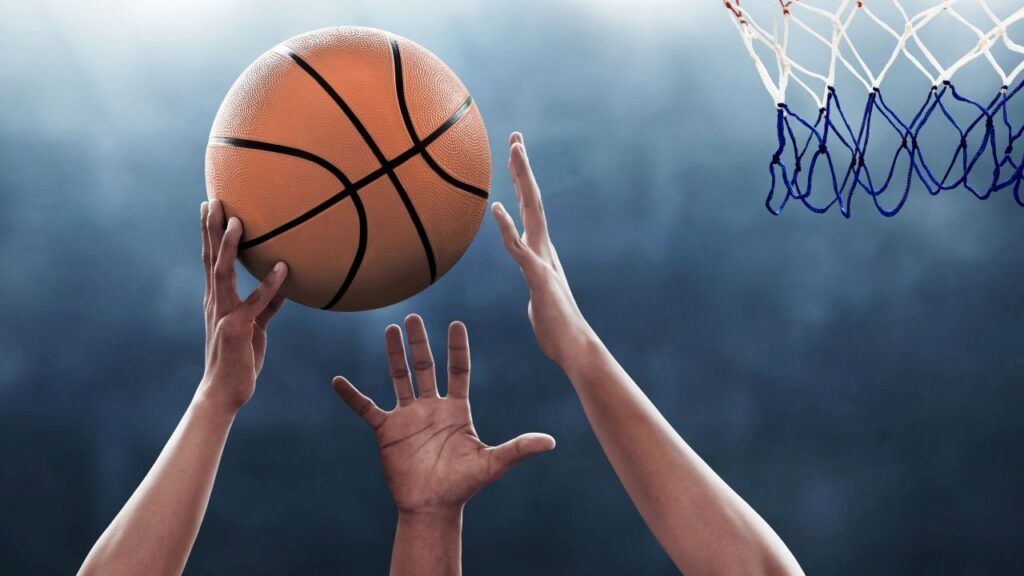
Master the Art of Catching the Ball
This is arguably the most important skill for preventing finger injuries. Never try to catch a basketball with just your fingertips or with stiff, rigid hands.
- Create a “Window”: Form a triangle or diamond shape with your thumbs and index fingers. This creates a wide, stable target for the ball.
- Use Your Pads, Not Your Tips: Aim to receive the ball on the pads of your fingers and your palms. This distributes the force of impact over a larger surface area.
- Absorb the Shock: As the ball makes contact, allow your hands, wrists, and elbows to bend slightly. This acts as a shock absorption system, cushioning the impact rather than letting it jolt a single finger joint. Think of your hands as a net, not a wall.
Defensive and Rebounding Awareness
Aggressive defense and rebounding often put your fingers in vulnerable positions. However, you can play smart to minimize the danger.
- Avoid Slapping Down: When trying to steal the ball, resist the urge to slap down recklessly at the dribbler. This is a common way to catch a finger on the ball, the opponent’s knee, or the floor. Instead, focus on timing and positioning.
- Rebound with Strong Hands: When going up for a rebound, keep your hands open and strong. Do not go after the ball with stiff, straight fingers pointing toward it. Position your hands to secure the ball firmly upon contact.
The Role of Supportive Gear
In some cases, especially if you have a history of finger injuries, using supportive gear can provide an extra layer of protection.
Using Basketball Finger Tape
Taping is a simple and effective method for supporting vulnerable joints. The most common technique is “buddy taping.”
- How it Works: Buddy taping involves taping an injured or weak finger to an adjacent, healthy finger.6 The healthy finger acts as a splint, preventing the other finger from moving sideways or bending back too far.
- When to Use It: You can use buddy taping proactively if you know one of your fingers is weak or feels unstable. It is also a standard practice during recovery to provide support as you return to play. Use athletic tape and ensure it is not so tight that it cuts off circulation.
Finger Sleeves and Braces
Finger sleeves are another popular option. These compression sleeves slide over the finger and provide gentle support to the joint. They can help reduce swelling and provide a sense of stability without significantly restricting movement. For more severe instability, a doctor may recommend a light, sport-friendly brace or splint, but this is typically reserved for post-injury care.
Post-Game Care and Listening to Your Body
Your responsibility for injury prevention does not end when the final buzzer sounds.
Cool-Down Stretches
Just as you warm up, a cool-down is beneficial. Gently stretch your fingers and wrists after playing to maintain flexibility and reduce stiffness. Hold each stretch for 20-30 seconds without bouncing.
Recognizing and Responding to Injury
One of the most crucial prevention tips is to not ignore pain. Pushing through a significant finger injury can turn a minor sprain into a chronic problem. If you experience severe pain, immediate swelling, deformity, or an inability to bend or straighten your finger, stop playing immediately. Apply the R.I.C.E. method (Rest, Ice, Compression, Elevation) and seek a medical evaluation to rule out a fracture or serious ligament damage.7
Conclusion
Basketball is a game of passion, skill, and athleticism. Finger injuries, while common, should not be accepted as an inevitable part of the sport. By dedicating time to proper preparation, focusing on sound fundamentals, and listening to your body, you can dramatically decrease your chances of getting sidelined. A prevention-minded approach involves strengthening your hands, mastering the technique of catching and handling the ball, using supportive taping when necessary, and knowing when to rest.8 By implementing these basketball finger injury prevention tips, you can protect your most valuable tools and ensure you stay on the court, playing the game you love at the highest level possible.
Frequently Asked Questions (FAQs)
-
Is it okay to keep playing with a jammed finger?
It is highly recommended that you stop playing and assess the injury. Playing through the pain can worsen a sprain, and if it is a fracture, continuing to play can cause significant long-term damage.9 It is always safer to rest and evaluate the severity.
-
How can I tell if my finger is broken or just jammed?
While both can be painful, signs of a fracture are typically more severe.10 Look for intense, sharp pain, rapid and significant swelling, a visible deformity or bend in the finger, and an inability to move it. A jammed finger is painful but usually retains some range of motion. If you suspect a fracture, see a doctor immediately for an X-ray.
-
Does taping a finger really help prevent injury?
Yes, taping, particularly buddy taping, can be very effective.11 It provides structural support to the finger joints, limiting movement that could cause a sprain or re-injury. It is especially useful for players with a history of finger sprains or joint instability.
-
How long does a typical jammed finger take to heal?
Recovery time varies based on the severity. A minor jam or mild sprain might feel better within a few days to a week. A more moderate sprain could take two to four weeks to heal completely. It is important to regain full, pain-free range of motion before returning to play.
-
Are there specific drills to improve finger strength just for basketball?
Absolutely. In addition to general grip strengtheners, drills like “wall finger push-ups” (pressing your fingertips against a wall) and repeatedly squeezing a tennis or racquetball can build functional strength. Also, simply practicing catching a weighted basketball or medicine ball (with a partner, safely) can help condition your hands to absorb impact.
Related Topics:
Are Visible Ribs Good: A Closer Look at Body Image and Health
How to Improve Cardio Fitness: Unlock Your Full Potential
Sorry, the comment form is closed at this time.