


25 Mar How Long to Steep Green Tea for Health Benefits
Green tea is one of the most researched beverages in the world. Yet most people still steep it incorrectly. Too short, and you lose antioxidants. Too long, and bitterness destroys both taste and nutrient balance. Timing changes everything.
If you want stronger metabolism support, better focus, improved heart health, and higher catechin intake, steeping time matters more than brand selection. The difference between 60 seconds and 4 minutes can change what your body absorbs.
This guide explains exactly how long to steep green tea for maximum health benefits, depending on tea type, temperature, and goals.
How Long to Steep Green Tea for Health Benefits
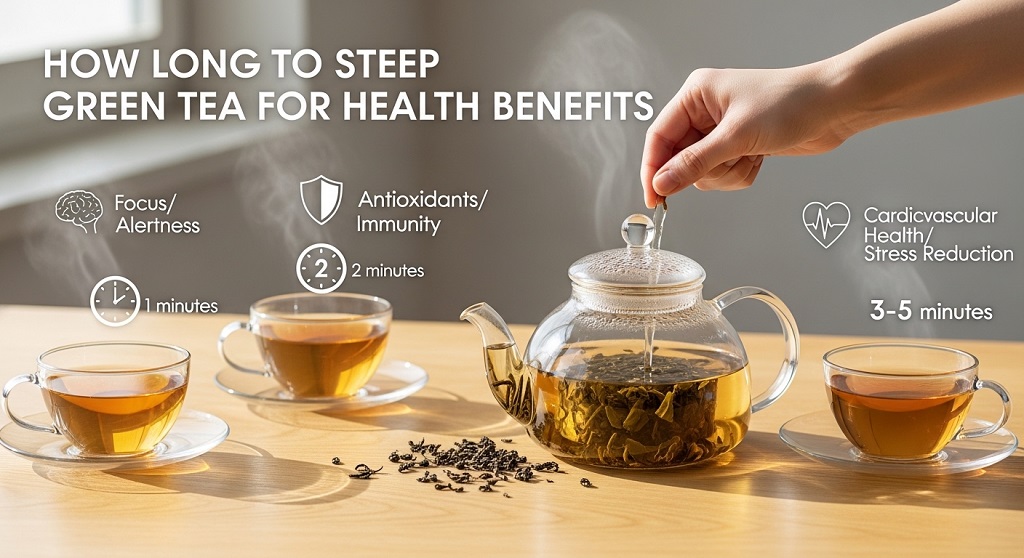
Snippet Answer: Steep green tea for 2–3 minutes at 70–80°C (158–176°F) to maximize antioxidants without increasing bitterness. Shorter steeping extracts less catechins, while longer steeping releases tannins that reduce flavor quality. Adjust timing slightly based on leaf type, water temperature, and desired caffeine strength.
What Is the Ideal Steeping Time for Green Tea?
Answer Block: The ideal steeping time for green tea is 2–3 minutes using water between 70–80°C. This range extracts catechins, L-theanine, and moderate caffeine without releasing excessive tannins. Steeping beyond 4 minutes increases bitterness and reduces drinkability without significantly improving health benefits.
Green tea leaves contain delicate compounds. Unlike black tea, they oxidize minimally. That means they release nutrients quickly but become harsh if over-steeped.
The most important compounds extracted during steeping include:
- EGCG (epigallocatechin gallate)
- L-theanine
- Flavonoids
- Natural caffeine
Studies show catechin extraction peaks around the 2–3 minute window when temperature stays below boiling. After this point, bitterness rises faster than antioxidant gain.
Many people assume longer steeping equals stronger health benefits. That is incorrect. Past three minutes, tannin release increases faster than EGCG concentration.
If your tea tastes sharp or overly grassy, steeping time is likely too long.
Does Steeping Longer Increase Antioxidants?
Answer Block: Longer steeping slightly increases antioxidant extraction but also releases tannins that reduce taste quality and may irritate digestion. Most beneficial catechins extract within the first 3 minutes, making extended steeping unnecessary for health optimization.
Antioxidants dissolve progressively in hot water. However, extraction follows diminishing returns.
Research indicates:
- 60 seconds extracts light polyphenols
- 120 seconds extracts most EGCG
- 180 seconds reaches optimal antioxidant balance
- Beyond 240 seconds increases tannins disproportionately
Tannins bind proteins in saliva. That creates dryness and bitterness. They do not improve antioxidant intake significantly after the optimal window.
For people drinking green tea daily, maintaining drinkability improves long-term consistency. That matters more than small increases in extraction.
Health benefits depend on regular consumption, not extreme steeping time.
How Does Water Temperature Affect Steeping Time?
Answer Block: Lower water temperatures require longer steeping times, while higher temperatures shorten steeping duration but increase bitterness risk. The optimal combination is 70–80°C for 2–3 minutes to preserve catechins and prevent tannin over-extraction.
Temperature controls extraction speed. Boiling water damages delicate green tea compounds.
Here is how temperature affects results:
| Water Temperature | Steeping Time | Result |
|---|---|---|
| 60°C | 3–4 minutes | Mild flavor, lower caffeine |
| 70°C | 2–3 minutes | Balanced antioxidants |
| 80°C | 2 minutes | Strong catechin release |
| 90–100°C | 1 minute max | Bitter, tannin-heavy |
If you do not own a thermometer, allow boiling water to cool for 5–7 minutes before pouring.
This simple step dramatically improves nutrient retention.
Does Green Tea Type Change Steeping Time?
Answer Block: Yes, different green tea varieties require different steeping times. Japanese green teas steep faster due to steaming processing, while Chinese green teas tolerate slightly longer steeping. Matcha does not steep and instead dissolves directly into water.
Processing method determines leaf structure. That structure controls extraction speed.
Common steeping recommendations include:
- Sencha: 1–2 minutes
- Gyokuro: 2 minutes at lower temperature
- Dragon Well (Longjing): 2–3 minutes
- Gunpowder green tea: 3 minutes
- Matcha: whisked, not steeped
Japanese teas release amino acids quickly. That means shorter steeping preserves sweetness.
Chinese teas unfold gradually. Slightly longer steeping improves balance.
Knowing your tea type improves consistency more than adjusting brand.
What Happens If You Steep Green Tea Too Long?
Answer Block: Over-steeping green tea releases excess tannins and caffeine, creating bitterness and possible stomach irritation. It does not significantly increase antioxidants beyond optimal extraction time and may reduce drinking enjoyment, making consistent intake less likely.
Many people assume bitterness signals strength. In green tea, bitterness usually signals over-extraction.
Symptoms of over-steeping include:
- Dry mouth sensation
- Sharp grassy taste
- Yellow-brown color
- Stomach discomfort in sensitive individuals
Tannins also interfere with iron absorption when consumed with meals.
For people drinking tea daily for metabolic support, smoother flavor encourages habit formation. Habit consistency determines long-term benefit.
Can Short Steeping Reduce Health Benefits?
Answer Block: Yes, steeping green tea for less than one minute reduces catechin extraction significantly. Short steeping produces mild flavor but delivers fewer antioxidants and less L-theanine, lowering potential benefits for metabolism, focus, and cardiovascular support.
Quick dipping tea bags is common but ineffective.
Key compounds release in stages:
- L-theanine releases early
- Caffeine follows
- Catechins release later
Stopping steeping too early prevents full antioxidant delivery.
If taste is too strong at proper steeping time, reduce leaf quantity instead of shortening steep duration.
This preserves nutritional value while adjusting flavor intensity.
How Many Times Can You Re-Steep Green Tea Leaves?
Answer Block: High-quality green tea leaves can be steeped 2–3 times while still providing antioxidants. Each infusion releases different compounds, with the second steep often delivering the smoothest flavor and balanced catechin concentration.
Multiple infusions improve extraction efficiency.
Typical infusion pattern:
- First steep: caffeine and aroma
- Second steep: catechins and sweetness
- Third steep: mild minerals and residual antioxidants
To re-steep properly:
- Increase steeping time slightly each round
- Maintain lower water temperature
- Use whole leaves instead of tea bags
This method maximizes value from premium green tea.
When Should You Drink Green Tea for Maximum Health Benefits?
Answer Block: Drink green tea between meals or in the morning for optimal antioxidant absorption. Avoid drinking immediately after meals to prevent reduced iron uptake. Consuming 2–3 cups daily provides consistent catechin exposure linked to long-term metabolic and cardiovascular support.
Timing affects absorption efficiency.
Best daily schedule:
- Morning: improves alertness
- Midday: supports metabolism
- Afternoon: enhances focus without heavy caffeine
Avoid late evening consumption if sensitive to caffeine.
Spacing intake throughout the day improves total catechin exposure compared to drinking a single large serving.
Conclusion: The Best Steeping Strategy for Health Benefits
The ideal green tea steeping time is simple but powerful. Use water between 70–80°C and steep for 2–3 minutes. This range extracts antioxidants efficiently without releasing excessive tannins.
Short steeping reduces catechin delivery. Long steeping increases bitterness and digestive discomfort. Balanced timing protects both flavor and nutritional value.
Choose whole-leaf tea when possible. Adjust steeping slightly based on variety. Drink between meals for better absorption. Aim for 2–3 cups daily to support metabolism, heart health, and cognitive performance.
Consistency produces results. Small improvements in preparation create measurable long-term benefits.
Start adjusting your steeping method today and turn a simple beverage into a reliable daily health habit.
Frequently Asked Questions
Is 5 minutes too long to steep green tea?
Yes. Steeping green tea for 5 minutes releases excess tannins and increases bitterness without significantly improving antioxidant extraction. The ideal steeping window remains 2–3 minutes for balanced health benefits and flavor.
Can I steep green tea in boiling water?
Boiling water damages delicate catechins and increases tannin extraction. Allow water to cool for several minutes after boiling before steeping green tea to preserve antioxidants and improve taste.
How many cups of green tea per day are healthy?
Drinking 2–3 cups daily provides sufficient catechins for metabolic and cardiovascular support. Higher intake is generally safe but may increase caffeine sensitivity in some individuals.
Does cold brewing green tea improve health benefits?
Cold brewing extracts fewer tannins and produces smoother flavor but slightly lower catechin concentration. It remains a healthy option, especially for people sensitive to bitterness.
Should I squeeze the tea bag after steeping?
Squeezing a tea bag releases additional tannins that increase bitterness. Allow the bag to drain naturally instead to maintain balanced flavor and nutrient profile.
Is loose-leaf green tea healthier than tea bags?
Loose-leaf green tea typically contains larger intact leaves, which preserve more antioxidants and allow multiple infusions. Tea bags often contain smaller particles with reduced extraction control.
Can green tea help with weight management?
Green tea supports metabolism through catechins and caffeine synergy. Regular consumption alongside balanced nutrition and activity may assist long-term weight management.
Related Topics: How to Start Neck Hump Exercises Without Gym Equipment
What Next: What is Mochi Health Weight Loss Program
Sorry, the comment form is closed at this time.