


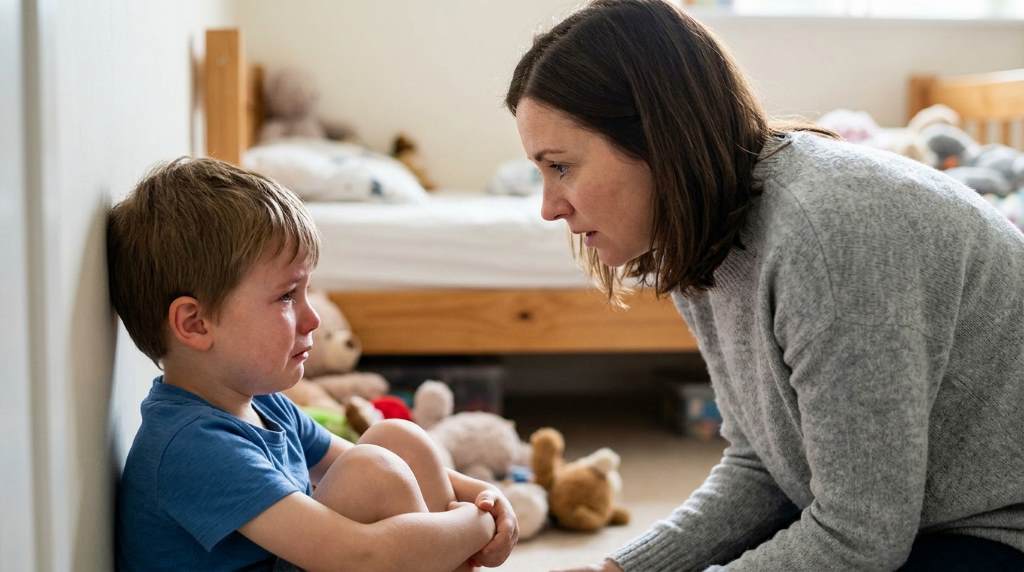
12 Jul How to Soothe a Scared Child Quickly
Every child experiences fear, whether from loud noises, unfamiliar places, or unexpected situations. Parents often wonder how they can restore calm without making the fear feel bigger. According to the National Institute of Mental Health, anxiety affects many children and adolescents during development. Meanwhile, the American Academy of Pediatrics encourages calm, supportive responses because children often mirror adult emotions. This guide explains practical, gentle strategies that help children feel safe, regain confidence, and recover from frightening moments with reassurance and patience.
Understand Why Your Child Feels Scared
Fear serves as a natural protective response that helps children recognize possible danger. However, young children often struggle to separate real threats from imagined ones. Additionally, staying calm allows your child to borrow your emotional stability during stressful moments. Regular care routines, including how to clean a baby stroller, also help create a familiar environment that supports emotional comfort.
Children react differently depending on their age, personality, and previous experiences. Therefore, understanding the cause helps you respond more effectively instead of guessing. Small fears deserve attention because they feel very real to a child.

Common Reasons Children Become Frightened
- Loud or sudden noises
- Dark rooms or bedtime
- Separation from parents
- New environments
- Medical appointments
- Bad dreams
- Strangers or unfamiliar people
- Scary television content
Stay Calm Before Comforting Your Child
Your emotional response strongly influences your child’s behavior during stressful situations. Therefore, take one slow breath before speaking or acting. Children often copy facial expressions, body language, and tone without realizing it.
Speak with a gentle voice while maintaining relaxed body language throughout the interaction. Instead of rushing, kneel to your child’s eye level and offer reassuring eye contact. Daily comfort habits, including basic tips to take care of baby skin, can also strengthen feelings of security through consistent caregiving.
Avoid telling children they should stop crying or become brave immediately. Instead, acknowledge their feelings while showing confidence that everything will improve. This balanced approach builds trust and emotional resilience over time.
Use Quick Calming Techniques That Really Work
Simple calming methods often reduce fear within minutes when used consistently. Moreover, gentle physical reassurance helps children regulate overwhelming emotions more effectively. Every child responds differently, so remain flexible while testing several techniques.
Offer a comforting hug if your child welcomes physical contact during stressful moments. Likewise, hold their hand or gently rub their back until breathing becomes steady. Organized spaces created through save space with a baby swing ideas may also reduce unnecessary stress by creating a calmer home environment.
Helpful Calming Methods
- Take slow breaths together
- Count slowly from one to ten
- Sing a familiar song
- Offer a favorite stuffed toy
- Use gentle rocking movements
- Read a comforting story
- Turn on a soft night light
- Speak with reassuring words
Validate Feelings Instead of Dismissing Them
Children need to know their emotions matter even when their fears seem unrealistic. Consequently, validation creates emotional safety without encouraging fearful behavior. Feeling understood often reduces panic much faster than criticism.
Say, “I understand that this feels scary right now,” before offering reassurance. Then explain the situation using simple words your child easily understands. Honest communication strengthens emotional trust between parents and children.
Create a Safe Environment During Stressful Moments
A peaceful environment supports emotional recovery after frightening experiences. Therefore, reduce loud sounds, bright lights, and unnecessary distractions whenever possible. Familiar surroundings often help children regain confidence more quickly.
Keep favorite blankets, books, or comforting toys within easy reach every day. Additionally, consistent bedtime routines help children feel secure before sleeping. Predictable routines reduce uncertainty and encourage emotional stability.
Teach Healthy Coping Skills for Future Situations
Children benefit when they learn calming skills before another fearful event occurs. As a result, they become more confident handling challenges independently. Practice these techniques regularly during calm moments rather than emergencies.
Role playing different situations helps children prepare for unfamiliar experiences without pressure. Likewise, simple breathing exercises become easier after frequent practice. Confidence grows steadily through repeated positive experiences.
Useful Coping Skills
- Name the feeling
- Practice deep breathing
- Imagine a safe place
- Repeat positive phrases
- Ask trusted adults for help
- Use calming music
- Draw emotions on paper
Know When Professional Support May Help
Most childhood fears disappear with reassurance, patience, and healthy routines over time. However, persistent fears sometimes interfere with school, friendships, or daily activities. Professional guidance can provide additional strategies when needed.
Seek medical advice if fear causes frequent panic, severe sleep problems, or long lasting emotional distress. Early support often prevents anxiety from becoming more difficult to manage later. Working together creates the best outcome for your child.
Mistakes Parents Should Avoid
Well meaning parents sometimes increase fear without realizing the effect of certain reactions. Therefore, avoiding common mistakes supports faster emotional recovery. Gentle guidance always works better than force.
- Do not mock your child’s fear.
- Do not compare siblings.
- Avoid raising your voice.
- Do not force immediate exposure.
- Avoid making unrealistic promises.
- Do not ignore repeated fears.
Conclusion
Learning how to soothe a scared child quickly begins with patience, empathy, and calm leadership. Every reassuring interaction strengthens emotional security while teaching valuable coping skills for future challenges. Small daily habits often make the greatest difference during stressful situations. Start practicing these supportive techniques today, and help your child build lasting confidence through consistent love, understanding, and encouragement.
Frequently Asked Questions
How long should it take to calm a scared child?
Most children begin calming within several minutes when they receive patient reassurance and consistent support.
Should I force my child to face fears immediately?
No, gradual exposure with encouragement works better than forcing stressful situations.
Can hugs help reduce fear?
Yes, comforting physical contact often helps children feel safe and emotionally regulated.
When should I seek professional advice?
Consult a healthcare professional if fear regularly disrupts sleep, school, or daily life.
Can bedtime routines reduce nighttime fears?
Yes, predictable bedtime routines create comfort and strengthen a child’s sense of security.
Sorry, the comment form is closed at this time.