


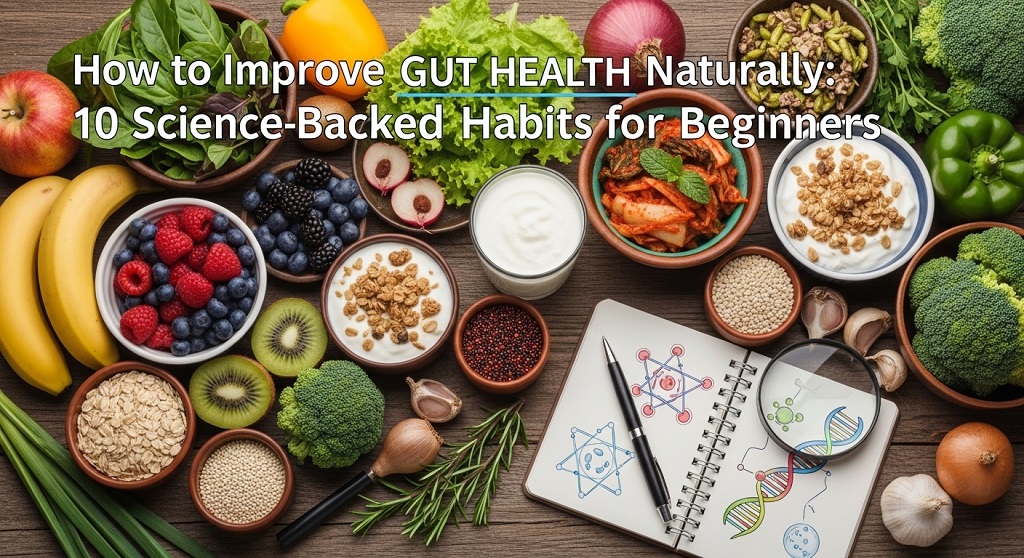
08 Apr How to Improve Gut Health Naturally: 10 Science-Backed Habits for Beginners
This guide explains exactly how to improve gut health naturally using practical, research-supported habits beginners can follow immediately.
What Is Gut Health and Why Does It Matter?
Gut health refers to the balance and function of microorganisms living in your digestive system. A healthy gut supports digestion, immune protection, nutrient absorption, hormone balance, and mental clarity. Poor gut health increases inflammation and raises risk of chronic conditions like obesity, diabetes, and autoimmune disorders.
Snippet Answer (50 words): Gut health depends on a balanced microbiome made of trillions of beneficial bacteria that regulate digestion, immunity, and metabolism. Supporting these microbes through fiber-rich foods, fermented products, hydration, sleep, and stress control improves digestion naturally and strengthens long-term physical and mental health without medication.
Your digestive tract hosts over 100 trillion microbes. These organisms help break down fiber, produce vitamins, regulate inflammation, and communicate with the brain through the gut-brain axis.
When microbial diversity drops, harmful bacteria dominate. This leads to symptoms such as:
- Bloating after meals
- Constipation or diarrhea
- Low energy levels
- Sugar cravings
- Skin irritation
- Frequent illness
Improving gut health restores microbial balance and strengthens multiple body systems simultaneously.
How Does Fiber Improve Gut Health Naturally?
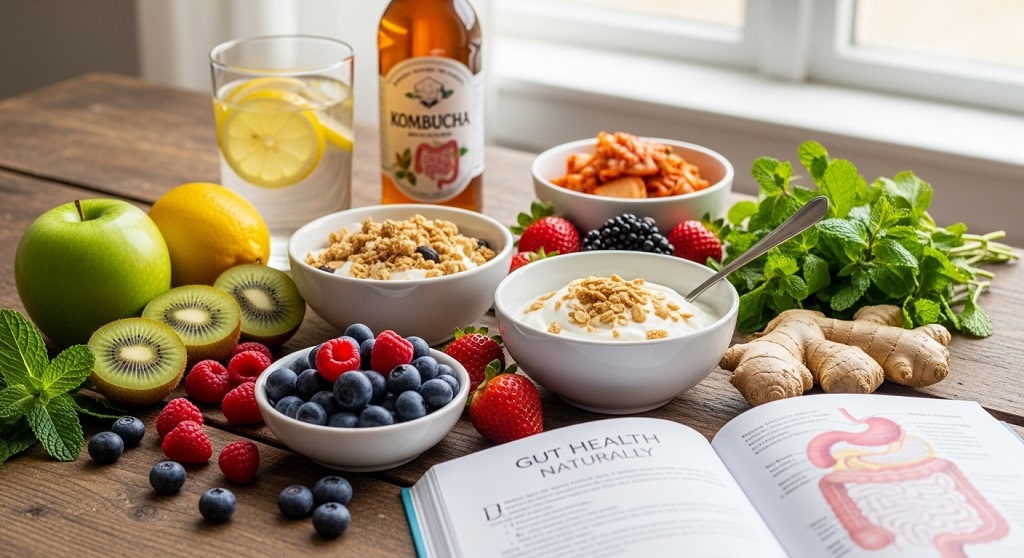
Dietary fiber feeds beneficial gut bacteria and increases microbial diversity. Soluble fiber supports digestion and reduces inflammation, while insoluble fiber improves bowel movement regularity. Adults should consume 25–35 grams daily from whole foods like vegetables, fruits, legumes, and oats.
Fiber acts as prebiotic fuel. When bacteria ferment fiber, they produce short-chain fatty acids (SCFAs). These compounds strengthen intestinal lining and reduce inflammation.
High-fiber foods include:
- Lentils
- Bananas
- Apples
- Spinach
- Oats
- Chia seeds
Increasing fiber gradually prevents gas and discomfort. Drink more water while increasing intake.
Consistent fiber consumption improves digestion speed, supports weight control, and stabilizes blood sugar.
Which Fermented Foods Restore Healthy Gut Bacteria?
Fermented foods contain live probiotics that replenish beneficial gut microbes. Regular intake improves digestion, enhances immune response, and reduces bloating. Effective options include yogurt, kefir, kimchi, sauerkraut, and traditional fermented vegetables consumed several times weekly.
Probiotics introduce beneficial bacteria directly into your digestive system. They improve microbial diversity quickly when consumed regularly.
Common probiotic-rich foods:
- Plain yogurt
- Kefir
- Kimchi
- Sauerkraut
- Miso
Choose unsweetened varieties. Added sugar reduces probiotic effectiveness.
Combining fermented foods with fiber increases survival of beneficial bacteria.
How Does Hydration Support Digestive Health?
Water supports nutrient absorption, stool movement, and intestinal lining protection. Proper hydration prevents constipation and maintains microbial balance. Most adults need 2–3 liters daily depending on climate, activity level, and diet composition.
Water softens stool and helps fiber move smoothly through the digestive tract. Without hydration, even high-fiber diets can cause constipation.
Hydration also supports mucus production in intestinal walls. This protective barrier prevents harmful bacteria from attaching to tissues.
Simple hydration strategies:
- Drink water before meals
- Carry a reusable bottle
- Limit sugary beverages
- Increase fluids during hot weather
Consistent hydration improves digestion speed and reduces toxin buildup.
Can Reducing Processed Foods Improve Gut Health?
Processed foods reduce microbial diversity and increase gut inflammation due to additives, refined sugar, and unhealthy fats. Replacing packaged snacks with whole foods improves digestion, supports beneficial bacteria growth, and lowers risk of metabolic disease.
Artificial preservatives disrupt microbiome balance. Excess sugar feeds harmful bacteria and yeast.
Common gut-disrupting ingredients include:
- Refined sugar
- Artificial sweeteners
- Emulsifiers
- Trans fats
Whole foods provide nutrients that nourish beneficial microbes instead of harmful ones.
| Food Type | Effect on Gut | Better Alternative |
|---|---|---|
| Sugary cereals | Feeds harmful bacteria | Oats |
| Soda | Damages microbiome balance | Water with lemon |
| Packaged snacks | Contains emulsifiers | Nuts and seeds |
| Processed meats | Increases inflammation | Fresh lean protein |
How Does Sleep Affect the Gut Microbiome?
Sleep regulates microbial balance and digestive hormone activity. Poor sleep disrupts beneficial bacteria and increases inflammation. Adults should aim for 7–9 hours nightly to maintain optimal gut function and immune protection.
Your microbiome follows circadian rhythms similar to the brain. Irregular sleep patterns weaken microbial diversity.
Sleep improves:
- Digestive enzyme production
- Hormone regulation
- Inflammation control
- Nutrient absorption
Establishing consistent sleep timing strengthens gut-brain communication.
Does Stress Damage Gut Health?
Chronic stress alters gut bacteria composition and weakens intestinal lining integrity. Managing stress through breathing exercises, walking, and mindfulness reduces inflammation and improves digestion naturally without medication.
Stress activates cortisol release. This hormone disrupts digestion and reduces beneficial bacteria growth.
Stress-reduction habits that improve gut health:
- Daily walking
- Deep breathing
- Meditation
- Journaling
Even 10 minutes of relaxation daily improves microbiome stability.
Are Prebiotic Foods Essential for Beginners?
Prebiotic foods nourish beneficial gut bacteria and enhance probiotic effectiveness. Regular intake supports microbial diversity and strengthens intestinal lining. Top sources include garlic, onions, bananas, oats, and asparagus.
Prebiotics act as fertilizer for beneficial microbes. Without them, probiotics cannot survive long-term.
Daily prebiotic foods:
- Garlic
- Onions
- Bananas
- Oats
- Asparagus
Combining prebiotics with fermented foods produces the strongest microbiome improvement.
How Long Does It Take to Improve Gut Health Naturally?
Most people notice digestion improvements within 1–3 weeks after adopting fiber-rich diets, fermented foods, hydration, and better sleep. Full microbiome restoration may take 2–3 months depending on consistency and lifestyle habits.
Early improvements include reduced bloating and improved bowel regularity. Energy levels often increase after week two.
Consistency determines long-term success. Microbiome recovery requires daily habits rather than short-term detox plans.
Conclusion: The Simple Plan That Restores Gut Health Naturally
Improving gut health naturally does not require expensive supplements or restrictive diets. It depends on consistent daily habits that support beneficial bacteria growth.
Start with three changes:
- Increase fiber intake
- Add fermented foods
- Improve sleep quality
Then strengthen results with hydration, stress management, and reduced processed food consumption.
These habits improve digestion, immunity, metabolism, and mental clarity together. Begin with one change today and build gradually. Small adjustments produce measurable long-term health improvements.
If you want lasting energy, better digestion, and stronger immunity, improving your gut microbiome is the most reliable place to start.
Frequently Asked Questions
What is the fastest way to improve gut health naturally?
Increase fiber intake, add fermented foods daily, drink enough water, and improve sleep quality. Most people notice digestion improvements within two weeks.
Can gut health improve without probiotics?
Yes. Fiber-rich and prebiotic foods naturally support beneficial bacteria growth without supplements.
Are bananas good for gut health?
Yes. Bananas contain prebiotic fiber that feeds beneficial bacteria and supports digestive balance.
How do I know if my gut health is improving?
Signs include reduced bloating, regular bowel movements, improved energy levels, clearer skin, and fewer cravings.
Is yogurt enough to fix gut health?
Yogurt helps introduce probiotics but must be combined with fiber and prebiotics for long-term improvement.
Does drinking water improve gut bacteria?
Yes. Proper hydration supports intestinal lining function and helps maintain microbial balance.
How often should I eat fermented foods?
Consuming fermented foods 3–5 times weekly supports microbial diversity and digestion.
Read More Also: How Long to Steep Green Tea for Health Benefits
Learn More: How to Reduce Anxiety Before Bed Naturally (Proven Techniques)
Sorry, the comment form is closed at this time.